

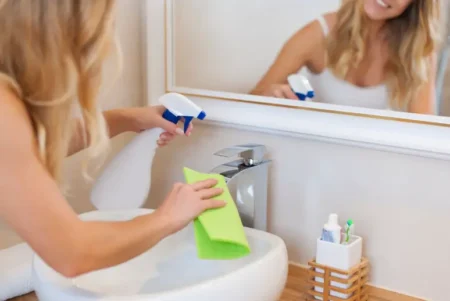
Limescale buildup is one of the most common problems in bathrooms. You start noticing white or cloudy stains on the sink, bathtub, and faucets. At first it looks like a minor issue, but over time it becomes harder to remove. This buildup comes from minerals in water, mainly calcium and magnesium, that stay on surfaces after water evaporates. The longer it sits, the more it hardens and sticks.
Why Limescale Is Hard To Clean If You Wait Too Long
Fresh limescale is relatively easy to remove. But when it builds up over weeks or months, it forms a dense layer that bonds with the surface. This is why quick wiping doesn’t work anymore.
The problem is not just visual. Thick buildup can damage surfaces and reduce the lifespan of fixtures. It also makes cleaning more difficult because new layers keep attaching to old ones.
What Actually Breaks Down Limescale
Limescale does not respond well to regular cleaning products. It requires something that can dissolve mineral deposits. Mild acids work best because they react with calcium and break it down.
This is why simple solutions based on acidic properties are effective. The goal is to soften the buildup first, then remove it without aggressive scrubbing that could damage the surface.
How To Clean Sink And Bathtub Properly
The process should be controlled and not rushed. Apply the cleaning solution to the affected areas and let it sit for a few minutes. This allows it to penetrate and loosen the buildup.
After that, gently wipe or scrub with a soft sponge. Avoid using rough materials, because they can scratch surfaces, especially on acrylic or coated finishes. Rinse thoroughly to remove any remaining residue.
Why Scrubbing Too Hard Makes It Worse
Many people try to remove limescale by applying more force. This often leads to surface damage instead of better results. Scratches make surfaces more porous, which allows minerals to stick even more easily in the future.
A slower approach with the right solution works better than aggressive cleaning. It removes buildup without creating new problems.
How To Prevent Limescale From Coming Back
The key is reducing how long water stays on surfaces. After using the sink or bathtub, quickly wiping them dry makes a big difference. This prevents minerals from settling and forming new layers.
Regular light cleaning also helps. Removing small amounts of buildup frequently is much easier than dealing with thick deposits later.
What A Clean Surface Feels Like
When limescale is fully removed, surfaces look smooth and reflect light more clearly. Water flows off instead of sticking, and cleaning becomes easier.
You don’t need to fight the buildup every time. Instead, the bathroom stays clean with minimal effort, because the surface no longer holds onto minerals the same way.
Picture Credit: Magnific