

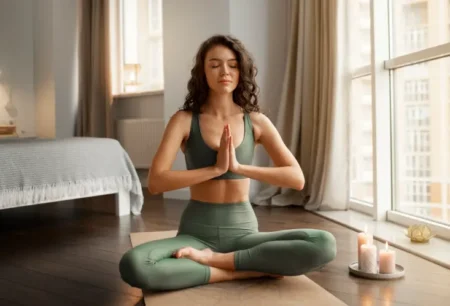
Stress rarely looks dramatic. It builds quietly. Tight shoulders, shallow breathing, racing thoughts, poor sleep. You adapt to it until it feels normal. Yoga works not by removing stress from your life, but by changing how your body responds to it.
Calm isn’t something you think into existence. It’s something your nervous system learns.
Stress Lives In The Body
When you’re stressed, your body shifts into survival mode. Muscles tighten. Breathing becomes shallow. Heart rate increases. The mind scans for problems. This response is useful in danger, but exhausting when constant.
Yoga interrupts this loop physically. Slow movement and controlled breathing send a signal to the brain that the threat has passed. That signal reduces stress hormones and lowers muscle tension.
The body relaxes first. The mind follows.
Breathing Is The Fastest Reset
One of the most powerful parts of yoga is breath control. Deep, slow breathing activates the parasympathetic nervous system, which is responsible for rest and recovery.
Most people breathe shallowly when anxious. That reinforces tension. In yoga, breathing becomes deliberate. Longer exhales calm the heart rate. Steady rhythm stabilizes focus.
Breath is the bridge between body and mind.
Movement Releases Stored Tension
Stress doesn’t disappear when you ignore it. It settles into posture. Hips tighten. Neck stiffens. Lower back aches. Gentle stretching increases circulation and reduces muscle guarding.
Yoga doesn’t require extreme flexibility. It requires attention. When you move slowly and consciously, you notice where you hold tension. Releasing it physically reduces the mental weight attached to it.
Focus Reduces Mental Noise
Yoga demands present attention. You focus on posture, balance, and breath. This narrows mental bandwidth. Instead of replaying problems, the mind anchors to the body.
This isn’t escape. It’s training attention. The more you practice, the easier it becomes to redirect racing thoughts in daily life.
Consistency Builds Emotional Stability
One session feels relaxing. Regular practice builds resilience. The nervous system learns that calm is accessible. Stress responses shorten. Recovery becomes faster.
You may still face pressure, deadlines, and uncertainty. The difference is how quickly your body returns to baseline.
Yoga Improves Sleep Quality
Chronic stress disrupts sleep. Yoga before bed reduces muscle tension and lowers mental agitation. This helps the body transition into rest more smoothly.
Better sleep improves mood, focus, and stress tolerance the next day. The benefits compound.
You Don’t Need Intensity
Yoga isn’t about extreme poses. Gentle, slow sessions can be just as effective for stress reduction as more dynamic styles. The goal is regulation, not performance.
Listening to your body is part of the practice.
Calm Is A Skill
Many people think calm is personality-based. It’s not. It’s physiological.
Yoga trains your body to shift from alert mode to recovery mode more efficiently. Over time, this changes how you experience pressure. Stress still appears, but it doesn’t control you.
Yoga Doesn’t Remove Stress. It Changes Your Response
Life won’t become quiet overnight. But your reaction to it can.
Yoga creates space between stimulus and response. In that space, calm grows. And when calm becomes familiar, stress stops feeling overwhelming and starts feeling manageable.
Picture Credit: Freepik